
A moustache topper looks fiddly, but it does not need pro-level fondant work. With the right materials and a simple template, they can make a clean, sturdy moustache cake topper without fondant skills that holds its shape through an Aussie party table, even in warmer weather.
This guide sticks to easy shaping, minimal tools, and reliable drying so they can get a sharp silhouette without stress.
What’s the easiest way to make a moustache cake topper without using fondant?
The easiest method is to use firm modelling chocolate or ready-to-roll icing with tylose mixed in, then cut and shape using a paper template. This approach reduces cracking and finger marks, so they can create a moustache cake topper without fondant skills in one short session.
It also dries more predictably than soft fondant, which matters in many Australian kitchens.
What materials work best in Australian conditions?
Modelling chocolate is often the most forgiving because it is less prone to drying out mid-shape. Ready-to-roll icing with a little tylose or CMC is also reliable, especially if they need a quick set.
In Australia, humidity varies, so they should store unused material in an airtight container and keep shaped pieces away from direct sun. For a moustache cake topper without fondant skills, stability matters more than fancy ingredients.
What tools do they need if they don’t own cake decorating gear?
They can do it with basic kitchen items. A small rolling pin (or smooth bottle), baking paper, a sharp paring knife, and toothpicks cover most steps.
For smoothing, a clean fingertip and a little cornflour or icing sugar works well. If they want crisp edges for a moustache cake topper without fondant skills, a craft blade helps, but it is optional.
How do they choose the right moustache shape and size?
They should match the moustache width to the cake’s top surface. A good rule is roughly one-third to one-half of the cake diameter for a single topper.
They can print a moustache outline, then trim it until it looks balanced on the cake board. Starting with a simple handlebar silhouette makes a moustache cake topper without fondant skills much easier to nail cleanly.
How do they make a quick template that guarantees symmetry?
They should fold paper in half and cut half the moustache shape along the fold, then open it out. This creates a mirrored outline with minimal measuring.
If printing, they can fold the printout and cut along the outline to confirm both sides match. Symmetry is what makes a moustache cake topper without fondant skills look intentional rather than homemade.
How do they prepare modelling chocolate or icing so it shapes neatly?
They should knead a small portion until pliable, then rest it for a few minutes. If it feels sticky, a light dusting of cornflour or icing sugar helps.
If it feels too soft, they can chill it briefly, then knead again. The goal for a moustache cake topper without fondant skills is a firm, smooth texture that can hold a sharp edge.
How do they roll it to the right thickness without tearing?
They should roll between two sheets of baking paper to prevent sticking and keep an even thickness. Aim for about 3–5 mm so it is strong but not bulky.
If the sheet starts to crack at the edges, it is usually too cold or too dry, so they should knead again. A consistent thickness makes a moustache cake topper without fondant skills less likely to warp as it dries.
How do they cut and shape the moustache cleanly?
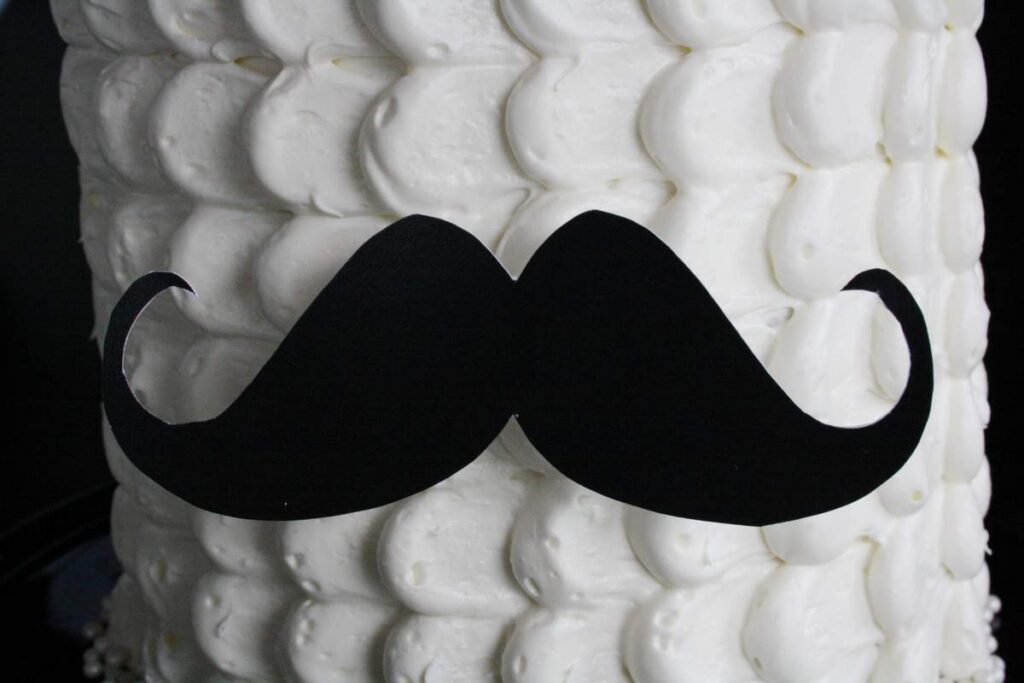
They should place the template on the rolled sheet and cut around it with a sharp knife, keeping the blade vertical. Then they can refine the tips with small, careful trims rather than trying to carve curves in one go.
For the centre dip, they should cut a shallow “V” and smooth it. This slow approach is key to a moustache cake topper without fondant skills that looks crisp.
How do they add curl and lift without advanced sculpting?
They can lift the tips by sliding a toothpick or a small rolled piece of baking paper under each end while it dries. This creates a natural handlebar curve without needing to model complex shapes.
If they want more drama, they can gently pinch and twist the tips, then support them. Simple supports make a moustache cake topper without fondant skills look dimensional.
How do they stop cracking, fingerprints, and lumpy edges?
They should handle the piece as little as possible and smooth edges with a fingertip barely dampened with water (for icing) or warmed slightly (for modelling chocolate). Over-wetting causes melting and sagging, so less is better.
For crisp edges, they can “polish” by lightly rubbing with baking paper. These small habits help a moustache cake topper without fondant skills look professionally finished.
How do they colour it black or brown without making a mess?
They should use gel colour, not liquid. For black, it is easier to start with dark brown and deepen it with black gel, kneading until even.
They can wear food-safe gloves to avoid stained hands. Clean colour kneading prevents streaks, which is important when aiming for a sharp moustache cake topper without fondant skills.
How do they make it stand up as a topper?
They can turn it into a pick topper by inserting two skewers or lollipop sticks into the back while the piece is still soft. They should push them in about halfway up the moustache, spaced evenly.
To secure, they can add a thin strip of the same material over the sticks like a patch. A strong backing is essential for a moustache cake topper without fondant skills that does not droop.
How long should it dry, and where should they dry it in an Australian kitchen?
They should let it dry at room temperature for at least 12–24 hours, depending on thickness and humidity. A cupboard shelf or a cool bench away from the oven is ideal.
In humid coastal areas, it may need longer, or a small fan in the room to circulate air. Good drying time keeps a moustache cake topper without fondant skills rigid and photo-ready.
How do they store and transport it to avoid breakage?
They should store it flat in a cardboard box lined with kitchen roll or bubble wrap, with nothing touching the moustache surface. If it has curled tips, they should keep supports in place until arrival.
For transport, the box should sit on a flat car floor, not a seat. Careful packing protects a moustache cake topper without fondant skills from snaps and smudges.
What quick decorations make it look more polished?
They can add a subtle sheen with a tiny brush of edible lustre diluted with clear vanilla or alcohol-based essence. For texture, they can score light “hair” lines with a toothpick, keeping strokes consistent.
If they want a playful look, they can dust the tips slightly lighter for depth. Small touches elevate a moustache cake topper without fondant skills without adding complexity.
What common mistakes should they avoid?
They should avoid rolling too thin, skipping drying time, or inserting sticks after the piece has set. They should also avoid adding too much water during smoothing, which can cause sagging and sticky patches.
Another common issue is making it too wide for the cake, which looks clumsy. Avoiding these pitfalls makes a moustache cake topper without fondant skills far more reliable.
How can they rescue it if something goes wrong?
If it cracks while soft, they can pinch it back together and smooth the seam with minimal moisture. If it breaks after drying, they can “glue” it with a paste made from icing and a tiny bit of water, then support it until set.
If the edges look rough, they can trim carefully and re-smooth. Most fixes are possible, which is reassuring when making a moustache cake topper without fondant skills close to party day.
What’s a simple timeline they can follow for a stress-free result?
They should make the topper one to two days before serving. Day one is shaping, inserting sticks, and setting supports for curl, then leaving it to dry overnight.
Day two is removing supports, adding any dusting or sheen, then boxing it for transport. Planning like this helps a moustache cake topper without fondant skills look clean, sturdy, and intentional when it hits the cake.
FAQs (Frequently Asked Questions)
What is the easiest way to make a moustache cake topper without fondant skills?
The easiest method is to use firm modelling chocolate or ready-to-roll icing mixed with tylose, then cut and shape it using a simple paper template. This approach reduces cracking and finger marks, allowing you to create a clean, sturdy moustache cake topper without fondant skills in a short session.
Which materials work best for making a moustache cake topper in Australian conditions?
Modelling chocolate is often the most forgiving material as it resists drying out mid-shape. Ready-to-roll icing with added tylose or CMC is also reliable for quick setting. In Australia’s varying humidity, store unused materials airtight and keep shaped pieces away from direct sunlight to maintain stability for your moustache cake topper without fondant skills.
What basic tools do I need to create a moustache cake topper if I don’t have specialised cake decorating gear?
You can make a moustache cake topper without fondant skills using everyday kitchen items like a small rolling pin or smooth bottle, baking paper, a sharp paring knife, and toothpicks. For smoothing edges, use clean fingertips with a little cornflour or icing sugar. A craft blade can help achieve crisp edges but is optional.
How do I choose the right moustache shape and size for my cake topper?
Match the moustache width to roughly one-third to one-half of your cake’s top diameter for balance. Start with a simple handlebar silhouette by printing and trimming an outline until it looks proportionate on your cake board. This makes nailing a clean moustache cake topper without fondant skills much easier.
How can I create a symmetrical template for my moustache cake topper quickly?
Fold paper in half and cut half the moustache shape along the fold, then open it out to reveal a perfectly mirrored outline. Alternatively, fold your printed design and cut along the outline to ensure both sides match. Symmetry is key to making your moustache cake topper without fondant skills look professional rather than homemade.
How do I prevent cracking and fingerprints when shaping my moustache cake topper?
Handle your piece minimally and smooth edges gently using a fingertip slightly dampened with water (for icing) or warmed (for modelling chocolate). Avoid over-wetting as this causes melting or sagging. To achieve crisp edges, lightly rub them with baking paper. These habits help your moustache cake topper without fondant skills appear professionally finished.
Other resources: The Role of a Food Safety Manager Software in Daily Operations