Traditional food safety compliance and risk management have long relied on paper-based systems, manual documentation, and reactive approaches to hazard control. These methods create significant challenges:
- Human errors in record-keeping
- Delayed responses to safety breaches
- Difficulty tracking products across complex supply chains
- Overwhelming administrative burdens during audits
The consequences range from regulatory penalties to devastating foodborne illness outbreaks that damage consumer trust and brand reputation.
Technology in food safety is fundamentally transforming these outdated processes. Digital platforms now automate critical tasks that once consumed countless hours of manual labor. Real-time monitoring systems detect potential hazards before they escalate into serious problems. Artificial intelligence analyzes global data streams to identify emerging risks that human teams might miss. Cloud-based solutions provide instant access to compliance records, eliminating the frantic search through filing cabinets when inspectors arrive.
The shift toward food safety compliance and risk management through digital tools isn’t merely about convenience—it’s becoming essential for survival in an increasingly regulated global marketplace. Modern risk management technology enables food businesses to meet stringent standards like HACCP more effectively while reducing resource expenditures. Companies that embrace these innovations gain competitive advantages: faster market entry, enhanced traceability, stronger consumer confidence, and the agility to adapt quickly to evolving regulatory requirements across multiple jurisdictions.
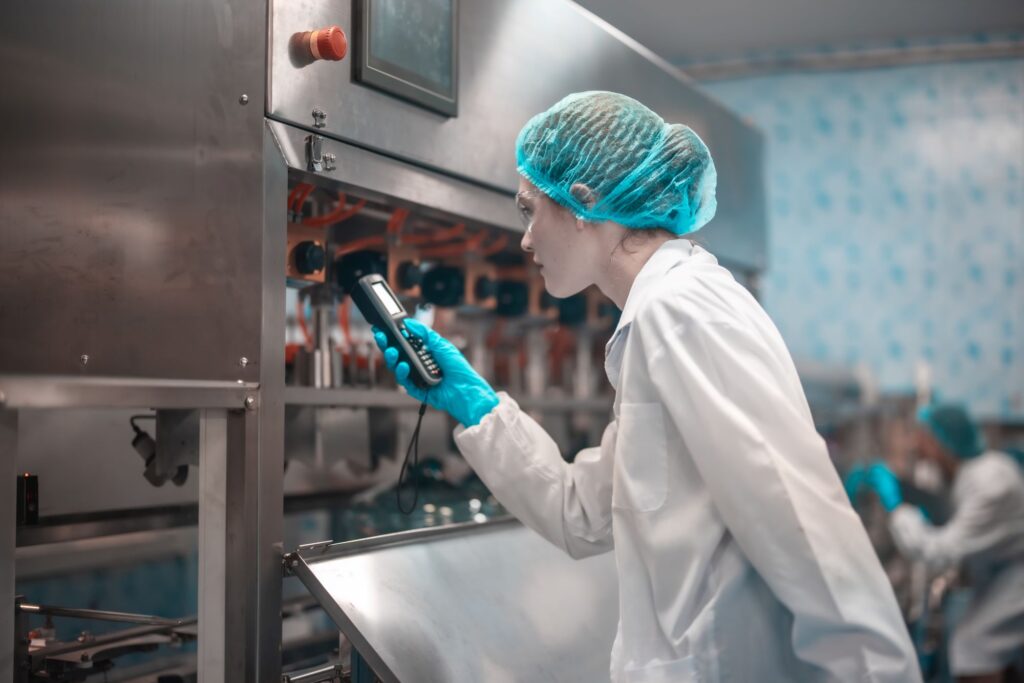
How Does Digital HACCP Compliance Improve Food Safety Management?
Digital HACCP transforms traditional Hazard Analysis and Critical Control Points protocols from paper-based systems into intelligent, automated platforms. HACCP serves as the internationally recognized framework for identifying, evaluating, and controlling food safety hazards throughout production processes.
Streamlined Documentation
Software solutions revolutionize this framework by eliminating manual documentation burdens. Automated food safety documentation generates records instantly as data enters the system, capturing temperature logs, sanitation schedules, and supplier verification without requiring staff to fill out forms by hand. The system timestamps every entry and flags incomplete records immediately.
Continuous Monitoring
Critical control points monitoring becomes continuous rather than periodic through digital platforms. Sensors connected to refrigeration units, cooking equipment, and storage facilities transmit real-time data directly into HACCP management systems. When temperatures drift outside safe parameters, the software triggers instant alerts to designated personnel via mobile notifications.
Reduced Human Error
Human error rates drop significantly with automation. Manual transcription mistakes, forgotten checks, and illegible handwriting disappear when digital systems handle data collection. The software validates entries against predetermined criteria, rejecting impossible values like negative temperatures or dates in the future.
Improved Data Accuracy
Data accuracy improves through standardized input methods and automatic calculations. Digital systems maintain consistent formatting across all records, perform complex mathematical operations without errors, and generate trend analyses that reveal patterns invisible in paper logs.
How Real-Time Environmental Monitoring and Predictive Analytics Prevent Food Safety Risks
Real-Time Environmental Monitoring
Real-time environmental monitoring utilizes IoT sensors food safety systems to continuously track critical parameters like temperature, humidity, pH levels, and air quality throughout production and storage facilities. These sensors transmit data instantly to centralized platforms, eliminating the delays inherent in manual checks and creating a constant surveillance network across all critical areas.
Predictive Analytics
The collected sensor data feeds into predictive analytics in risk assessment algorithms that identify patterns and anomalies before they escalate into safety incidents. Machine learning models analyze historical trends alongside current readings to forecast potential contamination risks, equipment failures, or environmental deviations that could compromise product safety. This is part of the growing role of data analytics in environmental monitoring for food safety, which allows for more precise and proactive interventions.
Immediate Intervention
Real-time environmental monitoring enables immediate intervention when conditions drift outside acceptable ranges:
- Automated alerts notify staff the moment temperature fluctuations threaten cold chain integrity
- Humidity sensors detect moisture levels that could promote bacterial growth in dry storage areas
- Air quality monitors identify potential cross-contamination risks from airborne particles
This proactive approach shifts food safety from reactive damage control to preventive risk mitigation. When predictive models flag a refrigeration unit showing early signs of malfunction, maintenance teams can address the issue before product spoilage occurs. The continuous data stream creates an audit trail that documents compliance while the predictive capabilities transform raw environmental data into actionable intelligence that prevents safety breaches before they impact consumers.
How Does Automated Record-Keeping Simplify Regulatory Compliance?
Automated record keeping transforms compliance from a time-consuming administrative burden into a streamlined digital process. Traditional paper-based systems require staff to manually log temperatures, cleaning schedules, supplier certifications, and corrective actions—creating opportunities for lost documents, incomplete entries, and filing errors that can derail audits.
Digital platforms eliminate these pain points by capturing data automatically from connected devices and user inputs, organizing information in structured databases that remain permanently accessible. Temperature logs from smart sensors, employee training certificates, and supplier documentation flow directly into the system without manual transcription.
The shift to digital reporting food safety delivers immediate benefits during regulatory inspections. Audit preparation technology generates comprehensive reports at the click of a button, pulling together months of compliance data that would otherwise require hours of manual compilation. Inspectors receive complete, chronologically organized records showing:
- Critical control point monitoring logs
- Corrective action documentation with timestamps
- Equipment calibration certificates
- Staff training completion records
- Supplier verification documents
Regulatory authorities access current compliance status through secure portals, eliminating the scramble to locate physical files. This transparency demonstrates a facility’s commitment to food safety while reducing inspection duration and stress for operations teams managing multiple compliance requirements simultaneously.
Why Is Enhanced Traceability Crucial for Food Safety Transparency?
Enhanced traceability is crucial for food safety transparency as it provides complete visibility throughout the entire supply chain, from the farm to the consumer’s plate. By utilizing digital systems, products can be tracked at every stage of production, processing, storage, and distribution. This tracking generates a comprehensive data trail that reveals the origin of ingredients and how they moved through the system.
The Importance of Supply Chain Traceability Technology
Supply chain traceability technology plays a vital role in ensuring food safety. It empowers businesses to respond swiftly to contamination incidents, reducing response time from days to minutes. Modern platforms employ various technologies such as barcodes, RFID tags, and blockchain systems to create unchangeable records of product movement.
When a safety issue arises, companies can quickly identify the affected batches, determine which facilities handled them, and trace forward to every location that received potentially contaminated products. This capability significantly minimizes the extent of recalls and safeguards public health. The ability to track food products accurately is thus an essential component in maintaining food safety standards.
The Impact of Digital Traceability Systems
Digital traceability systems have proven to be effective during foodborne illness outbreaks. For instance, in the case of a listeria outbreak, these systems can pinpoint the source of contamination within hours by isolating it to a specific production line or supplier. This swift action prevents the widespread distribution of unsafe products and protects consumers.
Building Consumer Trust through Transparency
Enhanced traceability not only aids in crisis management but also builds consumer trust through transparency. QR codes on product packaging enable customers to scan and access information about the product’s journey, including farm certifications, processing dates, and quality test results.
This level of transparency showcases a company’s dedication to maintaining safety standards, fostering brand loyalty, and setting its products apart in competitive markets where consumers increasingly seek accountability. Furthermore, with enhanced traceability technologies such as blockchain being adopted widely across various sectors (as discussed in this research article), we can expect even greater advancements in food safety transparency and consumer trust building in the future.
What Role Does AI-Powered Risk Management Play in Identifying Emerging Threats?
AI-powered food safety risk management systems analyze vast amounts of data from various sources such as regulatory bodies, scientific journals, social media platforms, and news outlets globally. These systems can process information at speeds that are impossible for human teams, allowing them to identify patterns and connections that indicate potential food safety issues before they become widespread problems.
How AI Technology Helps Identify Emerging Risks
The technology is particularly effective at detecting emerging risks by continuously monitoring multiple sources of data simultaneously. Here are some examples of how it works:
- When a new strain of pathogen is mentioned in research publications
- When regulatory agencies update their safety standards
- When consumer reports highlight unusual incidents related to ingredients
In all these cases, AI algorithms quickly flag these developments for further investigation.
Benefits of Global Data Scanning with AI
The ability to scan large amounts of global data using AI has significant advantages for food businesses. It means they can receive alerts about:
- New contaminants entering their supply chains
- Changes in safety regulations across different countries
- Recalls or quality issues with ingredients supplied by vendors
- Scientific discoveries related to food hazards
Shifting from Reactive to Proactive Responses
Traditionally, companies would only find out about risks through reactive measures such as customer complaints or failed inspections. However, with real-time identification provided by AI-powered systems, businesses now have the opportunity to respond proactively.
This shift allows teams to make necessary adjustments before problems reach consumers. For example:
- Modifying production protocols based on new scientific findings
- Updating safety procedures in anticipation of regulatory changes
- Adjusting sourcing strategies in response to identified contaminants
Building a Comprehensive Risk Intelligence Network
One of the key strengths of this approach is its ability to connect seemingly unrelated data points across various regions and product categories. By doing so, it creates a comprehensive network of risk intelligence that individual companies would struggle to maintain manually.
This holistic view enables organizations to better understand potential threats and take appropriate actions accordingly.
How Do Regulatory Intelligence Hubs Facilitate Compliance Across Jurisdictions?
Regulatory intelligence tools solve the overwhelming challenge of tracking food safety requirements across dozens of countries, each with distinct standards, labeling rules, and documentation demands. Food businesses expanding internationally face a maze of regulations that change frequently, making manual compliance research time-consuming and prone to costly oversights.
These centralized platforms aggregate international food safety standards into searchable databases, allowing compliance teams to quickly access relevant requirements for specific markets. Instead of consulting multiple government websites, translating foreign-language documents, and cross-referencing conflicting information, users can filter by product type, ingredient, or destination country to retrieve precise compliance criteria.
Compliance research technology delivers automatic updates when regulations change, eliminating the risk of operating under outdated standards. The software tracks amendments to:
- Allergen labeling requirements
- Maximum residue limits for pesticides
- Permitted food additives and colorants
- Packaging material restrictions
- Health claim substantiation rules
This centralized approach reduces the research burden from weeks to hours, enabling faster market entry decisions. Teams can compare requirements side-by-side across jurisdictions, identifying common standards that simplify product formulation strategies. The technology transforms regulatory complexity from a barrier into a manageable workflow, allowing businesses to confidently expand their geographic footprint while maintaining full compliance integrity.
How Do Collaborative Platforms Make Food Safety Risk Management Easier?
Collaborative software food safety solutions break down organizational barriers by creating unified digital environments where all stakeholders operate from a single source of truth. Production managers, quality assurance teams, suppliers, distributors, and regulatory compliance officers access the same real-time data through centralized compliance management systems, eliminating the confusion and delays caused by scattered information across emails, spreadsheets, and paper documents.
Instant Communication for Quick Action
These stakeholder coordination platforms enable instant communication when issues arise. A supplier can immediately notify manufacturers about a potential ingredient concern, while quality teams simultaneously alert distribution centers to hold affected batches. The platform automatically documents all interactions, creating an auditable trail of decisions and actions taken during risk mitigation efforts.
Clear Responsibilities and Timely Alerts
The technology assigns specific responsibilities and tracks completion status across different departments and external partners. When a critical control point deviation occurs, the system routes notifications to relevant personnel based on pre-defined protocols, ensuring no one misses crucial safety alerts due to miscommunication or information silos.
Automatic Data Integration for Better Decisions
Integration capabilities allow these platforms to pull data from environmental sensors, laboratory testing systems, and supplier databases automatically. This consolidation means stakeholders make decisions based on comprehensive, current information rather than fragmented reports that may be outdated before reaching decision-makers. The result is faster response times, reduced duplicate work, and stronger accountability throughout the entire food safety ecosystem.
How Does Data-Driven Decision Making Improve Food Safety Outcomes?
Technology transforms raw information into actionable intelligence through comprehensive data analytics food safety systems. Digital platforms aggregate data from multiple sources—temperature logs, inspection records, supplier audits, and consumer feedback—creating a unified view of food safety performance across operations.
Informed decision making becomes possible when businesses can identify patterns and correlations invisible in manual systems. A bakery might discover that product contamination spikes correlate with specific ingredient batches or equipment maintenance cycles. This granular visibility allows managers to address root causes rather than symptoms.
The power of performance improvement technology lies in its ability to quantify results:
- Baseline measurements establish current safety performance levels
- Trend analysis reveals whether interventions are working
- Benchmarking compares performance against industry standards
- Predictive modeling forecasts future risks based on historical patterns
Real-time dashboards present complex data through intuitive visualizations, enabling quick responses to emerging issues. When a cold storage unit shows temperature fluctuations, managers can investigate immediately rather than discovering the problem during routine checks.
Continuous improvement cycles accelerate as teams test hypotheses, measure outcomes, and refine protocols based on evidence. A meat processing facility might experiment with modified sanitation schedules, using data to validate which approach reduces bacterial counts most effectively. Such strategies exemplify the principles of data-driven decision-making which not only enhances food safety but also optimizes operational efficiency.
Conclusion
How Technology Simplifies Food Safety Compliance and Risk Management becomes clear when examining the measurable impact on operational performance. Digital transformation in risk management delivers four critical advantages: enhanced efficiency through automation, improved accuracy via real-time monitoring, greater transparency across supply chains, and seamless collaboration among stakeholders.
The benefits of automation in compliance extend beyond reducing paperwork. Businesses gain the ability to respond instantly to emerging threats, maintain consistent standards across multiple locations, and demonstrate regulatory adherence with minimal manual intervention.
The future of food safety technology points toward increasingly sophisticated AI-driven systems and interconnected platforms that predict risks before they materialize. Organizations that embrace these digital tools position themselves to meet evolving regulatory demands while building stronger consumer trust. Investing in technology-enabled food safety systems transforms compliance from a resource-intensive burden into a strategic advantage that protects brand reputation and accelerates market growth.
Learn more: Best Practices for Achieving Food Safety and Compliance Across Multiple Locations